
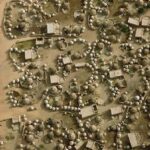
African Settlement Patterns and Fractals: A Harmonious Blend of Nature, Culture, and Mathematics
May 4, 2014
Self-Organizing Activities in the Yoruba Community and the Conservation of Cultural Identity
May 6, 2014Fractal geometry plays a significant role in shaping African culture in several ways, influencing everything from architecture and settlement patterns to art, social structures, and spiritual practices. Here’s a closer look at how fractal geometry intertwines with African culture:
1. Settlement Patterns and Urban Planning
Fractal geometry is evident in the way many African villages and cities are designed. Traditional African settlements often follow fractal principles, where similar patterns are repeated at different scales. For example, a village might have a central space (often a chief’s compound or communal area), surrounded by smaller homes and structures, all laid out in circular or concentric designs. This fractal structure continues down to the household level, where individual homes are organized with similar geometric patterns.
These settlement designs are not accidental; they reflect deep cultural values, such as communal living, respect for nature, and adaptability. Fractal geometry allows these settlements to expand and adapt organically as populations grow, without losing their sense of order or community. This mirrors the flexibility and interdependence found in many African social systems, where family, clan, and community play central roles.
2. Architecture and Building Design
African architecture often incorporates fractal patterns in the design of homes, sacred spaces, and public buildings. In many African cultures, homes are built in circular or hexagonal shapes, which are fractal-like in their repetition and scalability. These shapes are practical—they provide better protection from harsh winds and sun—and they are also symbolic, reflecting the cyclical nature of life, death, and rebirth, which are central themes in many African belief systems.
The use of fractals in architecture also serves as a visual metaphor for social hierarchy and relationships. For example, in Zulu homesteads, the chief’s residence is the largest and most central structure, with smaller homes radiating outward, symbolizing the chief’s importance and connection to the broader community. This fractal organization, repeating from the macro level of the village to the micro level of individual homes, reflects the cultural emphasis on leadership, kinship, and social order.
3. Art and Design
Fractal geometry profoundly influences African art, particularly in textile designs, sculpture, and beadwork. African artists often employ repeating geometric patterns, such as spirals, circles, and grids, which are key elements of fractal geometry. These designs are not only aesthetically pleasing but also carry deep symbolic meaning. They often represent aspects of the natural world, such as water, fertility, and the cosmos, as well as spiritual and philosophical concepts.
For example, the intricate beadwork of the Maasai or the woven textiles of the Ashanti people incorporate repeating patterns that symbolize continuity, balance, and harmony. The fractal nature of these designs mirrors the interconnectedness of the physical and spiritual worlds, a common theme in African culture.
4. Spiritual and Cosmological Beliefs
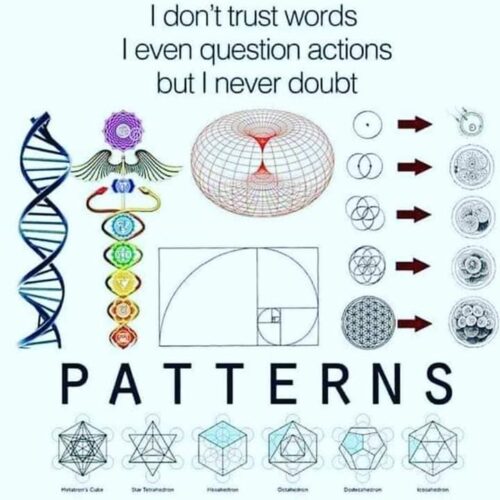
In many African cultures, fractal geometry is not just a design principle; it is a reflection of spiritual and cosmological beliefs. The idea of fractals—patterns that repeat at different scales—resonates with African understandings of the universe, where the macrocosm (the larger universe) is mirrored in the microcosm (the individual and the community).
Many African spiritual practices emphasize the interconnectedness of all life, from the ancestors and deities to the natural world and the individual. Fractal designs in sacred spaces, such as shrines and temples, reflect this belief in the cyclical and interconnected nature of existence. Repeating geometric patterns often symbolize eternal life, ancestral protection, and the balance between the material and spiritual realms.
5. Social Organization and Governance
Fractal geometry also plays a role in the social organization and governance of African societies. Many traditional African communities are organized in a way that reflects fractal principles, where smaller units (families) replicate the structure of larger units (clans or villages). This hierarchical but interconnected system allows for flexibility and balance, with each smaller unit maintaining autonomy while being part of a larger whole.
For example, in some African societies, decision-making processes are based on fractal-like structures, where local leaders represent their communities within larger councils, ensuring that decisions made at the top are informed by the needs and concerns of the grassroots. This fractal organization reflects the cultural value of consensus-building and the importance of maintaining harmony within the community.
6. Education and Knowledge Transmission
Fractal geometry also plays a role in how knowledge is transmitted across generations in African cultures. Traditional education systems often emphasize learning through observation and participation, where younger generations are introduced to cultural knowledge in stages that repeat and build upon previous lessons. This cyclical and iterative approach mirrors the fractal principle of repetition at different scales, with each level of learning deepening the individual’s understanding of their culture and place in the world.
In conclusion, fractal geometry shapes African culture in profound ways, influencing everything from settlement patterns and architecture to art, social organization, and spiritual beliefs. This integration of fractal principles reflects African societies’ deep connection to nature, community, and the cosmos, offering a holistic approach to life that is both practical and symbolic. By understanding the role of fractals in African culture, we gain insight into the wisdom and complexity of African traditions and their relevance to modern sustainability and design.